

Buy Canadian Policy: Mark Carney Urges Domestic Spending After Trump’s 100% Tariff Threat
Editorial


Buy Canadian policy took centre stage in Canada’s economic strategy on Tuesday as Prime Minister Mark Carney urged citizens to support domestic businesses and workers, hours after US President Donald Trump threatened to impose 100 per cent tariffs on Canadian goods.
The announcement came amid escalating trade tensions between Ottawa and Washington, triggered by Canada’s renewed economic engagement with China.

Buy Canadian policy aims to shield economy from foreign pressure
In a video message posted on his X (formerly Twitter) account, Carney framed the policy as a necessary response to mounting international pressure on Canada’s economy.
“With our economy under threat from abroad, Canadians have made a choice: to focus on what we can control. You’re choosing to put your hard-earned dollars behind Canadian businesses and Canadian workers,” Carney said.

He added that the federal government would mirror this approach by prioritising domestic sourcing under the Buy Canadian policy, particularly for large national projects.
Domestic sourcing for housing, defence, and infrastructure
Carney stated that Canada’s future development would rely heavily on local industries, materials, and labour.

“We’re aiming to build big — from millions of homes that will improve affordability, to major projects that will transform our economy, to new military hardware that will protect Canadians and our sovereignty,” he said.
The Prime Minister emphasised the use of Canadian steel, aluminium, lumber, technology, and workers, declaring:
“Buy Canadian, build Canadian, and together we will build Canada strong.”
Trump issues warning over Canada-China trade ties
The policy announcement followed a sharp warning from US President Donald Trump, who accused Canada of acting as a gateway for Chinese goods into the United States.
Writing on Truth Social, Trump referred to Carney as “governor” and threatened sweeping retaliation if Ottawa proceeded with trade agreements with Beijing.
If Canada makes a deal with China, it will immediately be hit with a 100% tariff against all Canadian goods and products coming into the USA,” Trump said
He further claimed China would “eat Canada alive” and accused Ottawa of undermining US interests.

Canada seeks alternative trade stability
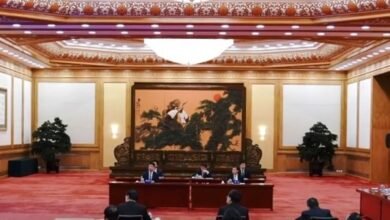
Tensions intensified after Carney’s recent visit to China — the first by a Canadian leader in nearly a decade. During the trip, Canada and China reached agreements to:
-
Reduce tariffs on selected Canadian agricultural exports
-
Introduce quotas on Chinese electric vehicle imports
-
Explore expanded Chinese investment
Chinese President Xi Jinping welcomed the visit as a “turnaround” in bilateral relations.
Carney later described the talks as more “predictable” compared to current trade uncertainty with the United States, calling the discussions “realistic and respectful.”
Growing trade conflict reshapes Canada’s strategy
Trump also criticised Canada for opposing his proposed “Golden Dome” missile defence system over Greenland, while simultaneously strengthening economic ties with China.
The diplomatic standoff highlights Canada’s shifting strategy as it balances relations with its largest trading partner, the US, while diversifying economic links in Asia.
With global trade becoming increasingly volatile, Carney’s government is now placing stronger emphasis on domestic manufacturing, supply chains, and economic self-reliance under the Buy Canadian policy.
Buy Canadian policy announced by Prime Minister Mark Carney