

North Korea Uses US Action in Venezuela to Reinforce Nuclear Justification !
By Samir Singh 'Bharat' : Chief Editor

WAR-REPORT : North Korea is likely to further strengthen its justification for pursuing what it describes as “self-defensive” nuclear weapons development following the United States’ military operation against Venezuelan President Nicolás Maduro on January 3. Analysts assess that Pyongyang’s reaction to the incident further reduces the prospects for renewed dialogue between the United States and North Korea.
On January 4, North Korea’s Ministry of Foreign Affairs condemned the US operation to arrest and extradite Maduro, calling it a “violent violation of Venezuela’s sovereignty” and portraying it as evidence of the United States’ “gangster-like nature.” The statement framed the operation as proof that Washington continues to use military force to remove governments it opposes.


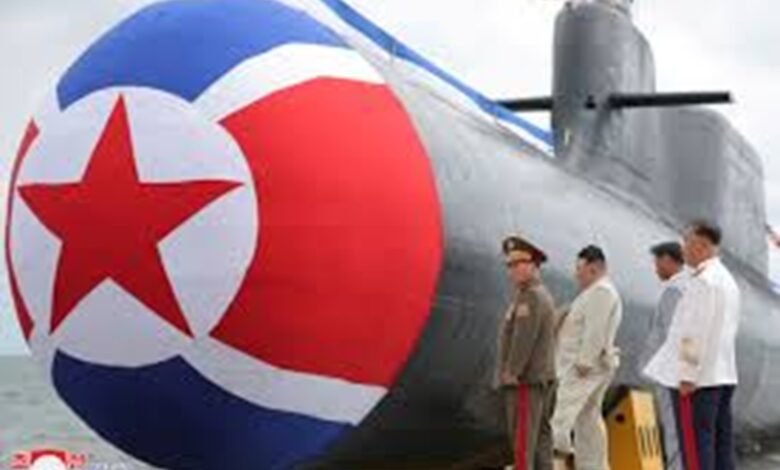
The same day, Workers’ Party of Korea (WPK) General Secretary Kim Jong Un oversaw a missile launch and called for expanding a “strong and reliable nuclear deterrent.” Kim cited “recent geopolitical crises” as justification for strengthening North Korea’s nuclear capabilities, a remark widely interpreted as a reference to the US operation in Venezuela.
South Korea’s Ministry of Unification (MOU) assessed on January 5 that Pyongyang’s response reflects its long-standing pattern of “anti-US solidarity,” drawing parallels to North Korea’s messaging after US strikes on Iranian nuclear facilities in June 2025. The MOU noted that North Korea frequently uses such international events to reinforce its narrative that nuclear weapons are essential for regime survival.

North Korea and Venezuela have maintained a largely symbolic partnership rooted in shared anti-US rhetoric since establishing diplomatic relations in 1974. While Kim Jong Un has continued limited diplomatic engagement with Caracas, there is no evidence of meaningful trade, economic cooperation, or defense collaboration between the two countries. A United Nations Panel of Experts (PoE) investigation into possible bilateral cooperation—launched after a 2018 meeting between Maduro and a senior WPK official—was never completed before the panel was dissolved due to opposition from Russia and the People’s Republic of China (PRC). Venezuela remains primarily a political ally for North Korea within the socialist and anti-Western bloc, with minimal strategic importance in military or industrial terms.

Separately, North Korea has accused South Korea of violating its airspace with drones, allegations that Pyongyang may use to reinforce anti-South narratives and maintain pressure against inter-Korean engagement. On January 10, North Korea claimed that South Korean drones entered its airspace in September 2025 and again on January 4. State media released images of a drone fuselage and alleged flight records, asserting that the aircraft launched from a civilian-restricted area and therefore must have been operated by South Korean authorities.

South Korea’s Ministry of National Defense (MND) rejected the accusations on January 10, stating that the military did not “operate drones on the dates North Korea claims.” Defense Minister Ahn Gyu-back further stated that the drone presented by North Korea does not match any model used by South Korea’s armed forces. On January 11, WPK Propaganda and Agitation Department Deputy Director Kim Yo Jong demanded that Seoul explain the drone’s origin and identity.
North Korea has characterized the drone as a surveillance and reconnaissance platform, claiming it was equipped with a high-resolution optical camera and used to collect imagery. Seoul’s denial aligns with the Lee Jae Myung administration’s de-escalatory approach toward Pyongyang, even as North Korea continues to advance claims that justify its hardline stance toward both the United States and South Korea.